Thematic Project
Organizing Salt Workers
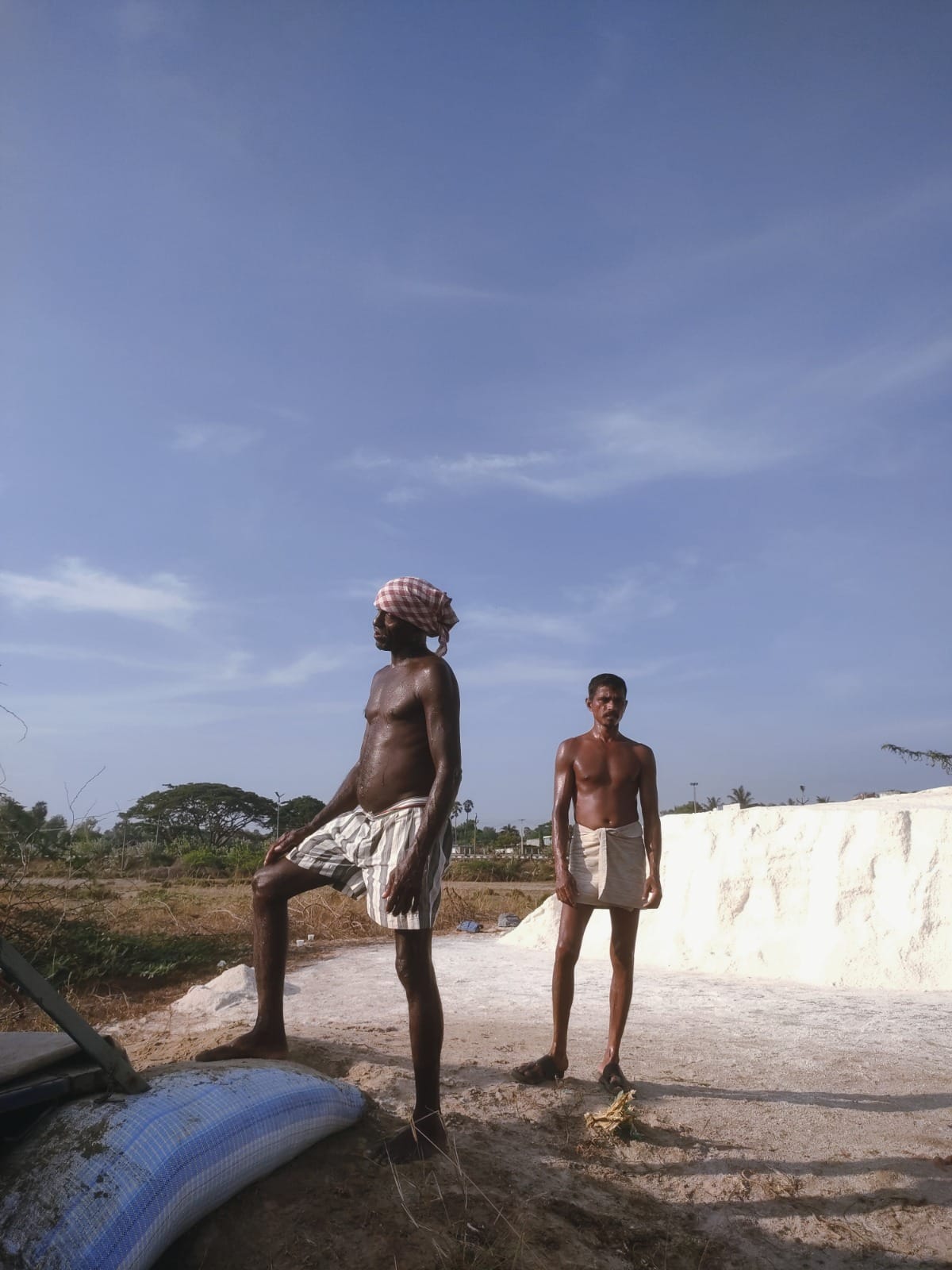
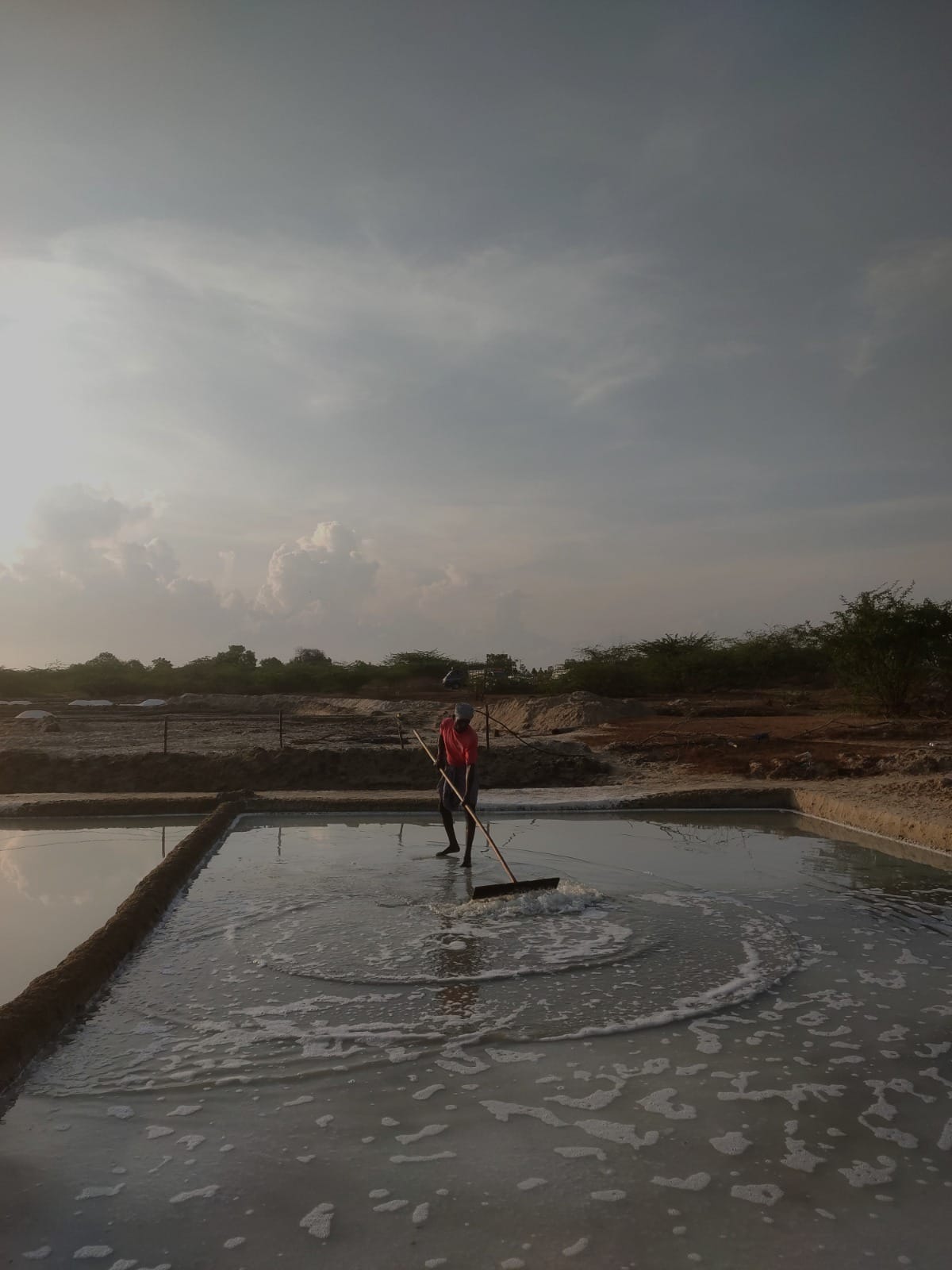
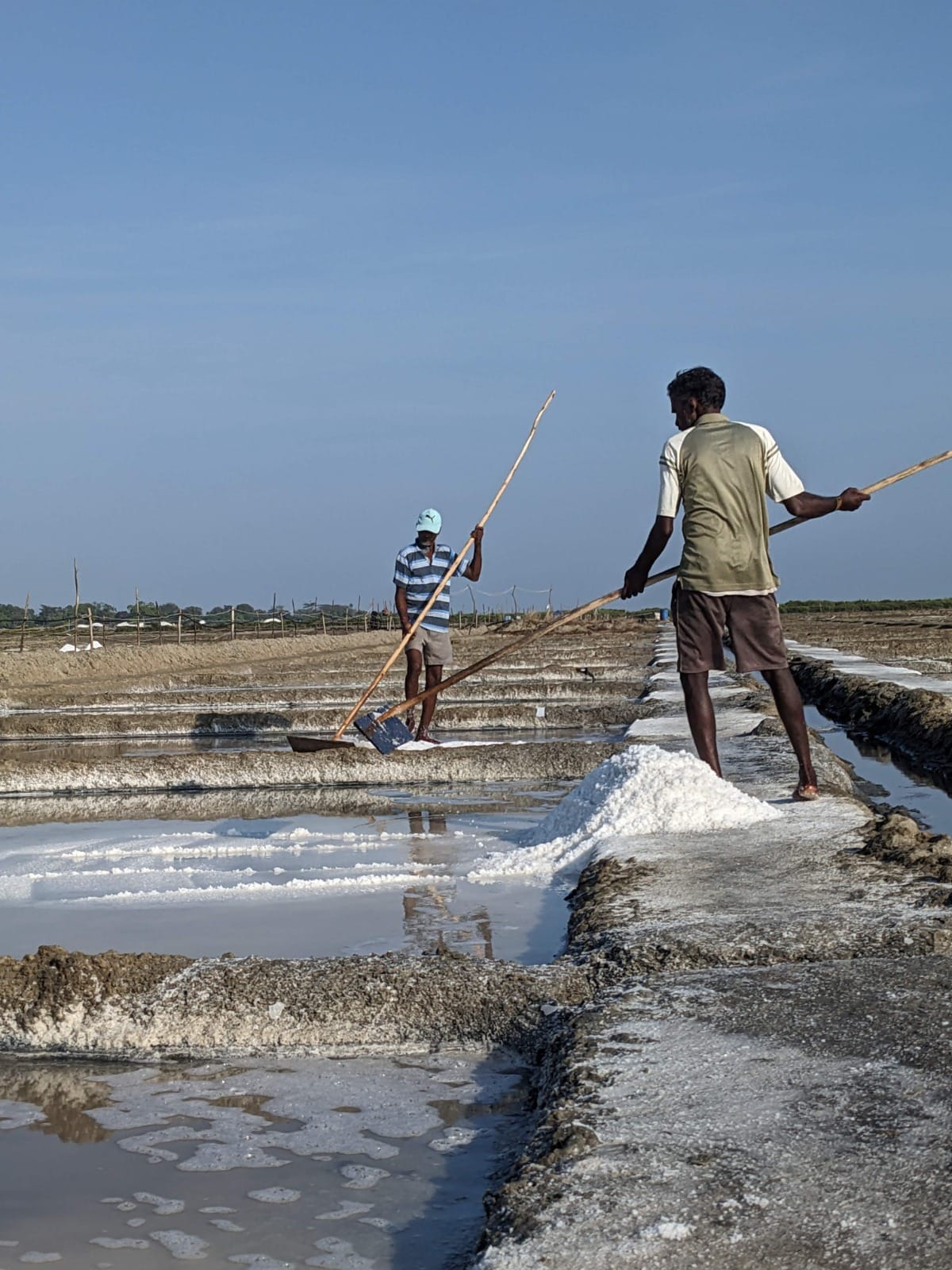
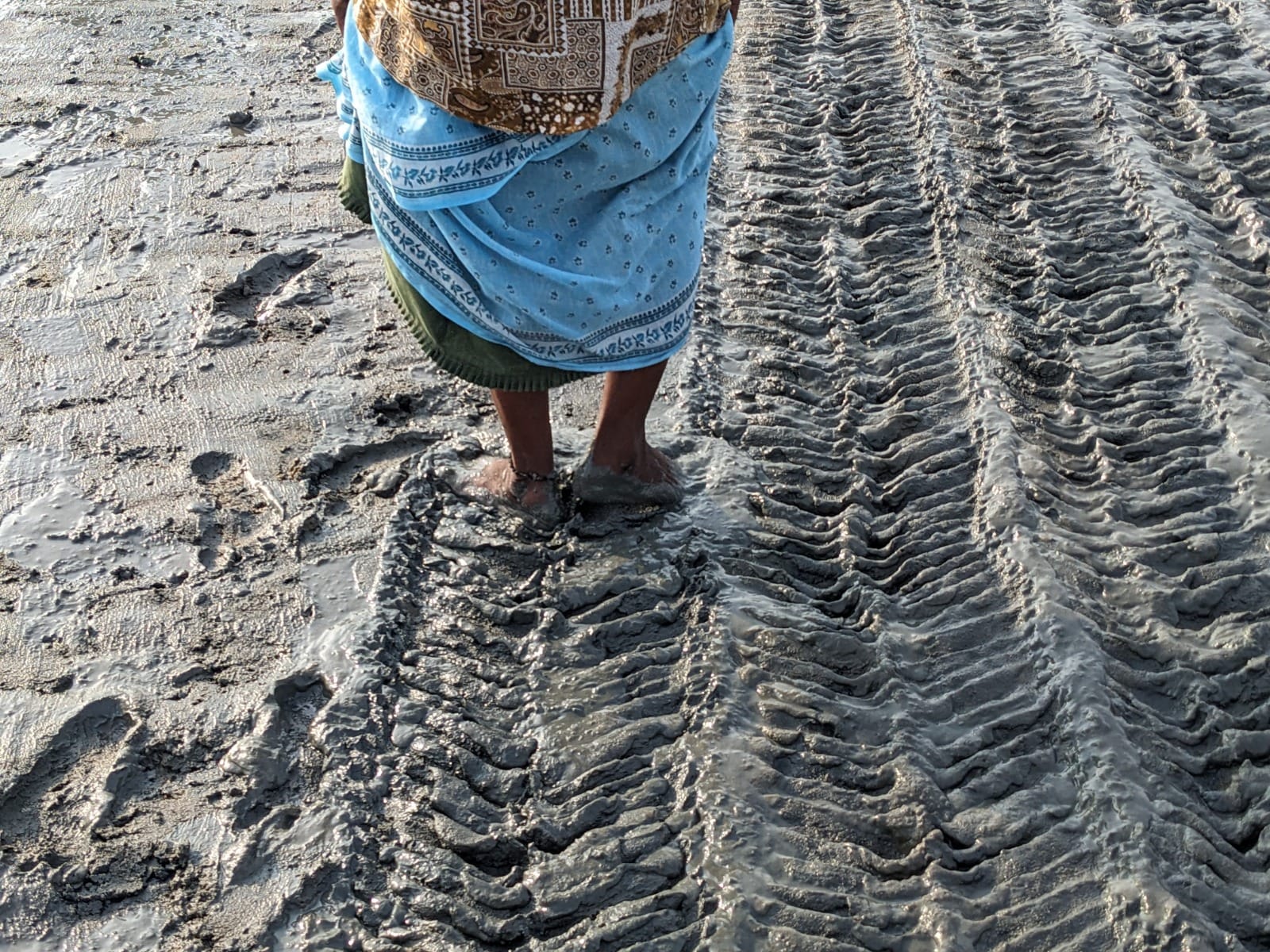
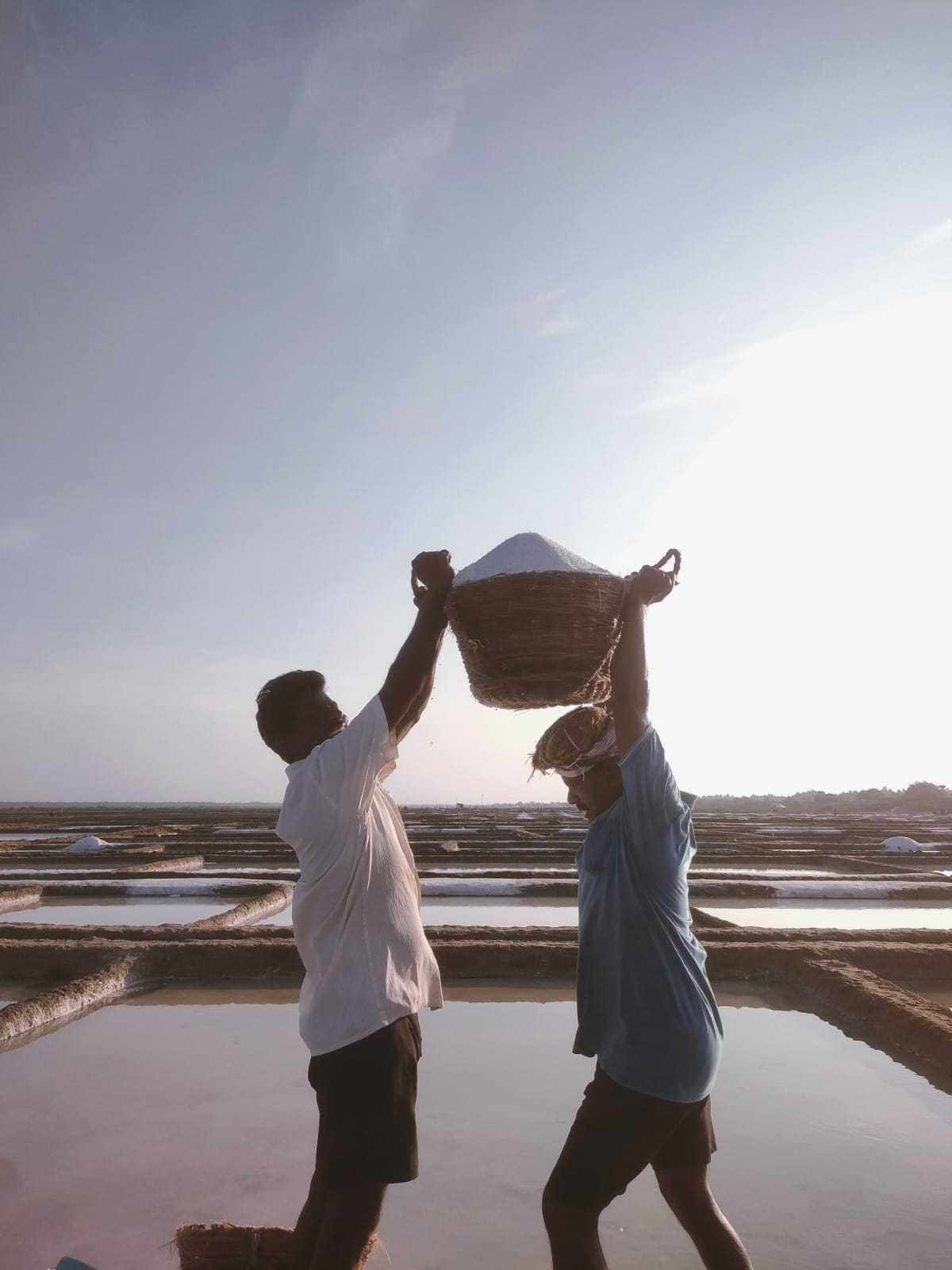
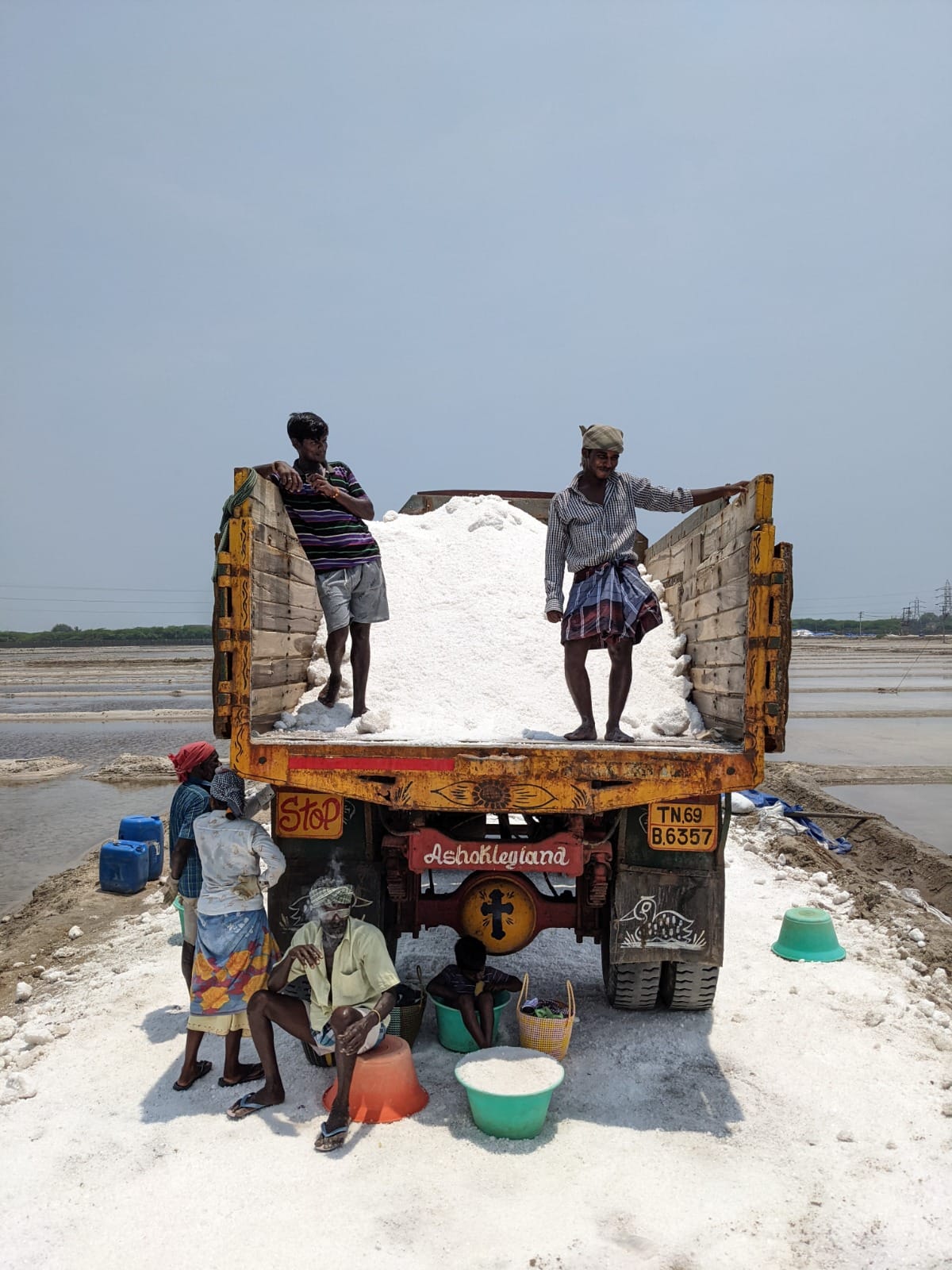
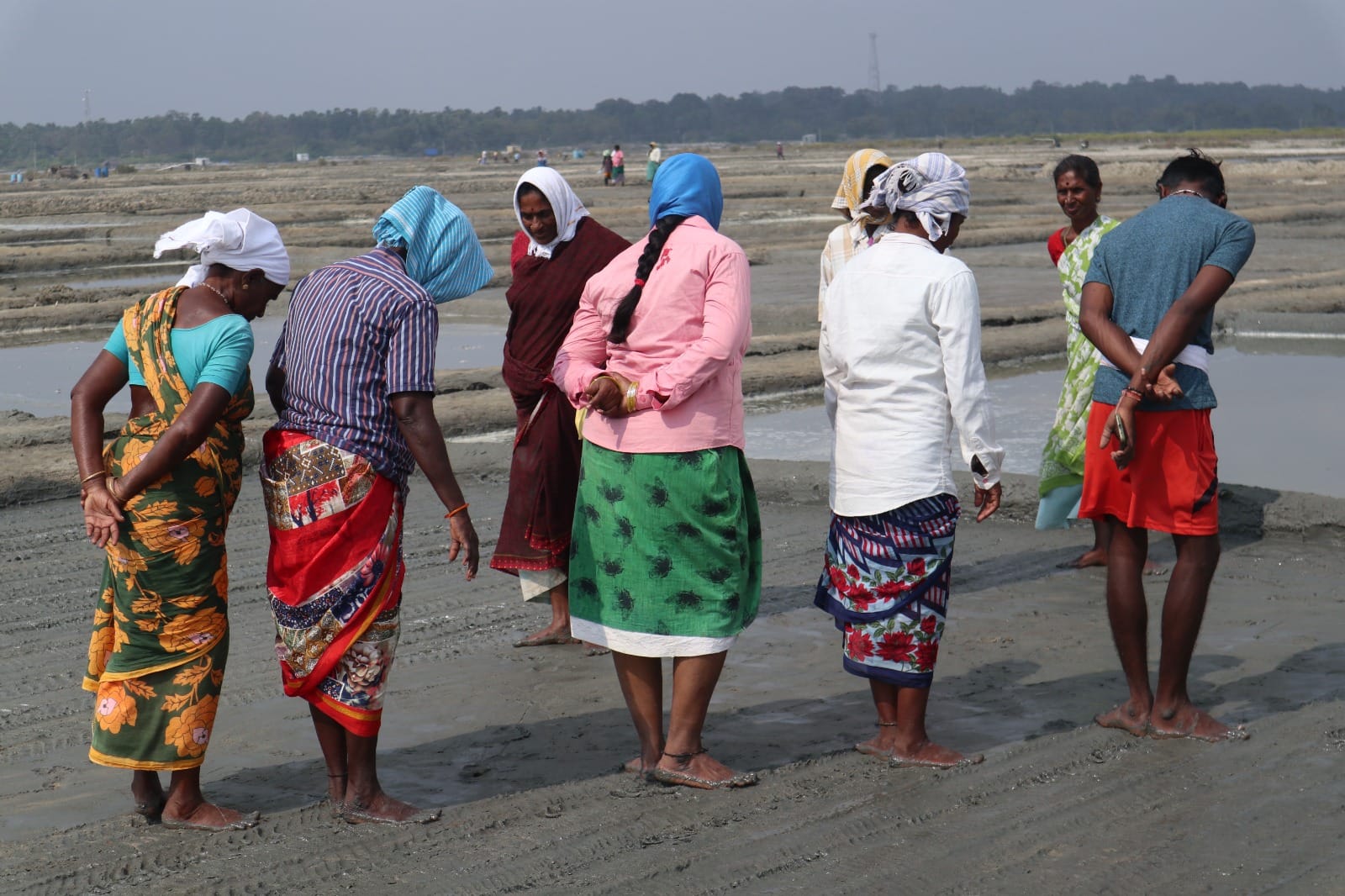
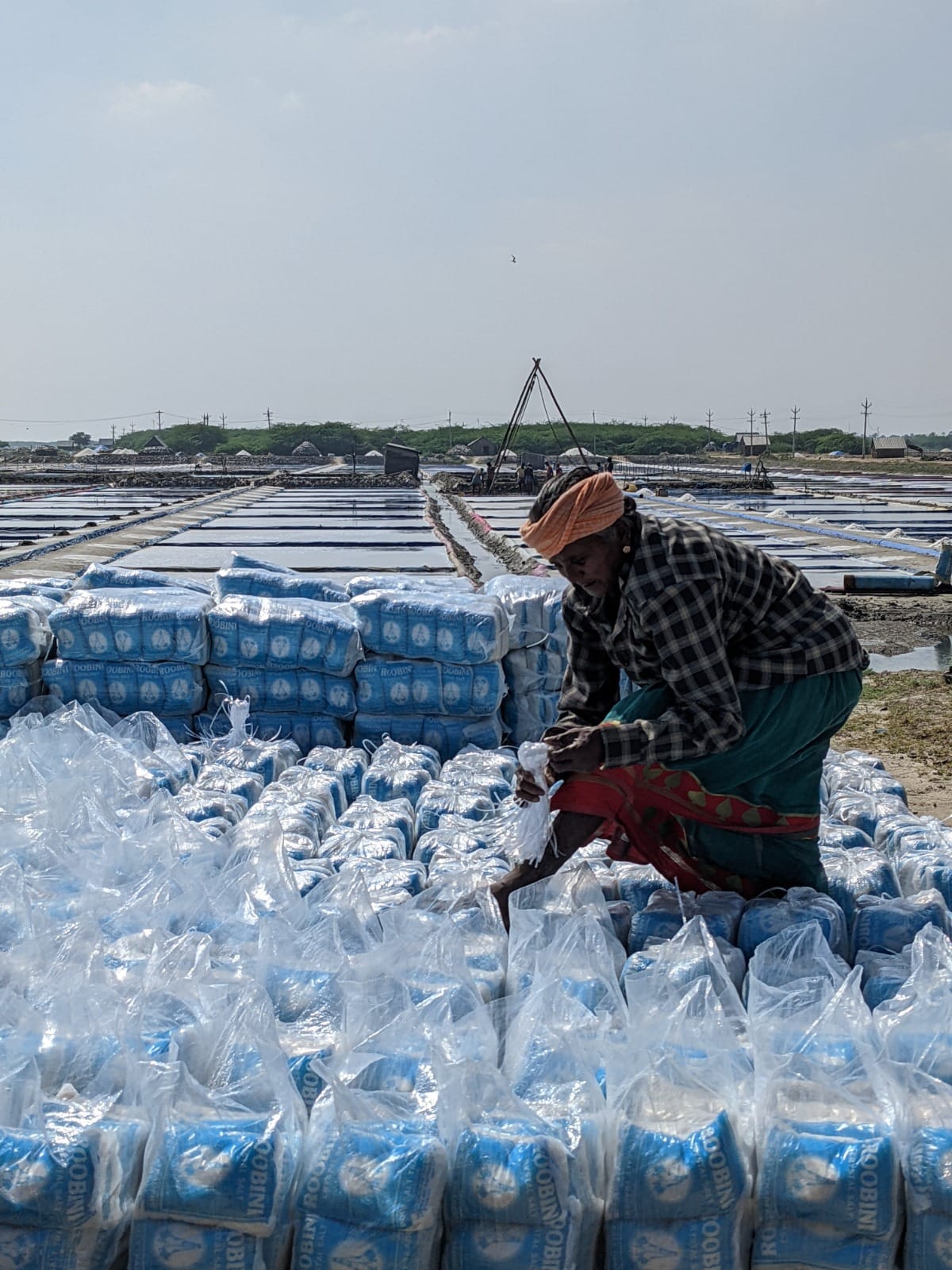
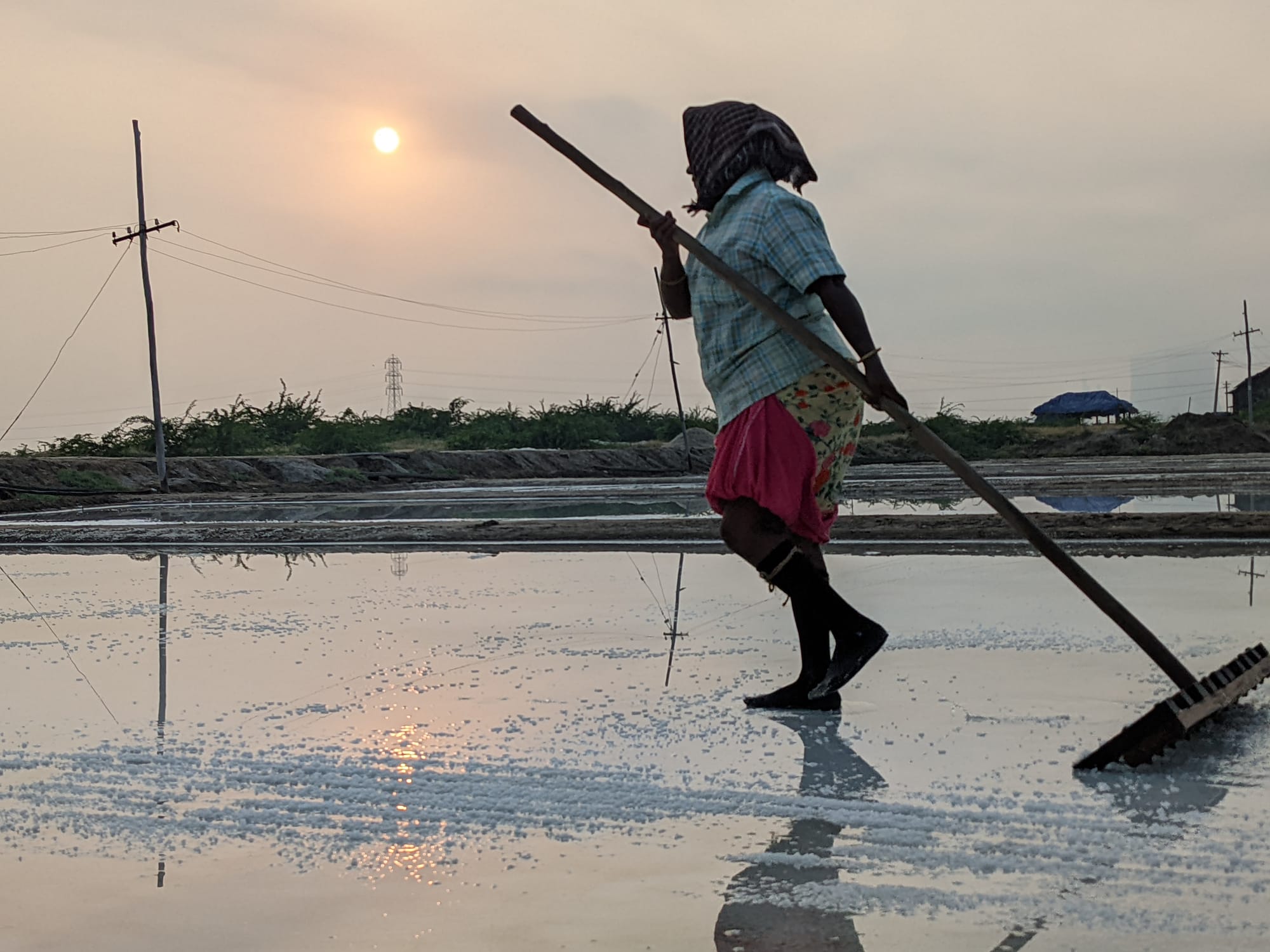
Salt is the most everyday of items in our households and bodies. Yet, the workers who produce this essential commodity are rarely in our sight. Thoothukudi, Vedaranyam and Marakkanam are the major salt-producting regions in Tamil Nadu, with the state being the third largest producer of salt in India. The conditions of work are distinct in each of the three regions. Thoothukudi, the largest salt-producing region, has relatively well-organized labour. In Vedaranyam, the workers are unorganized and labour under oppressive regimes, with the salt workers tied to the salt pans and the salt pan owners through a system of debt bondage. Marakkanam has both small holdings of salt pans which employ workers as daily wage employees and industrial salt production where the workers are employed under the respective factories. In all three regions, Dalits make up the largest section of labourers.
Focused on the conditions of salt work and workers in these three regions, our initiative pursues three sets of questions.
One, we conduct household surveys to document the socio-economic and health conditions of salt workers. To date, we have conducted household surveys in both Markkanam and Vedarnyam to bring out the stark gap in familial income and expenditure in salt workers’ families. Full reports from these surveys are currently being drafted.
Two, we engage with the cooperative movement meant to support the salt workers belonging to the oppressed castes. For instance, in Markkanam, a Dalit Salt Cooperative was active till 2017 employing upto 450 workers. Most of these employees face difficulties in getting their provident fund, as the process has been made digital. ROSA is assisting these former employees to obtain their Provident Fund, by helping them get through the bureaucracy and the digital burden. Additionally, in both Markkanam and Vedarnyam, the state announced rainy season compensation especially for salt workers, who remain unemployed during the monsoon season of September to December. To access this, workers had to register online. The process was complicated for various reasons, making it inaccessible for most of the workers. Learning from this, we approached the state labour welfare department through petitions, requesting to simplify the process, which they agreed to.
Three, we generate research-based evidence to support legal action in courts. Legal action is necessary in many situations such as when minimum wages are denied, to demand monsoon season compensation, documenting health hazards of salt work to identify and address specific illnesses, and finding new avenues to unionise workers. We have been able to produce crucial resources and evidence in support of a minimum wage court case with the labour tribunal in 2021 in Thoothukudi and an employees right to access provident fund case in Markkanam.
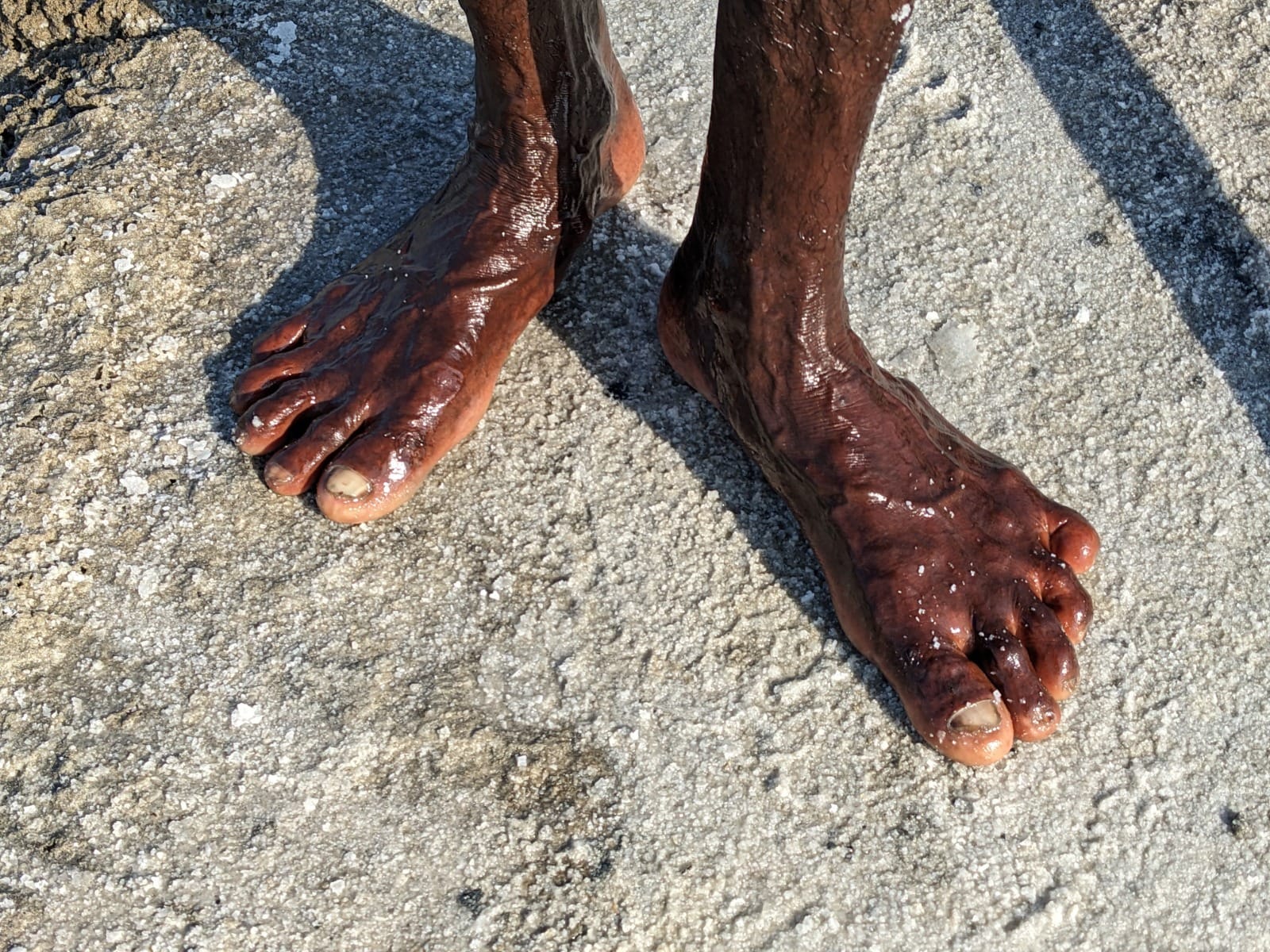
In addition to continuing such work, we plan to prioritize two activities. First is to One, we will document the history of the Dalit salt workers cooperative in Markakanam. Second, to conduct a health survey among salt workers in all three regions to assess the impacts of salt work on the working bodies of the labourers. We aim to use these findings to advocate for better working conditions in the salt work industry and appropriate medical interventions for salt workers